
 Jigar Saraswat
 With technology, there have been massive options for handicrafts. But vintage one still rules!
Men’s wear, women’s wear, bed sheets, kids’ garments, and many more. The buyer will always glance at embroidery, the most ancient craft of India. Now it is seen in many forms, such as printed, handcrafted, and machine-made.
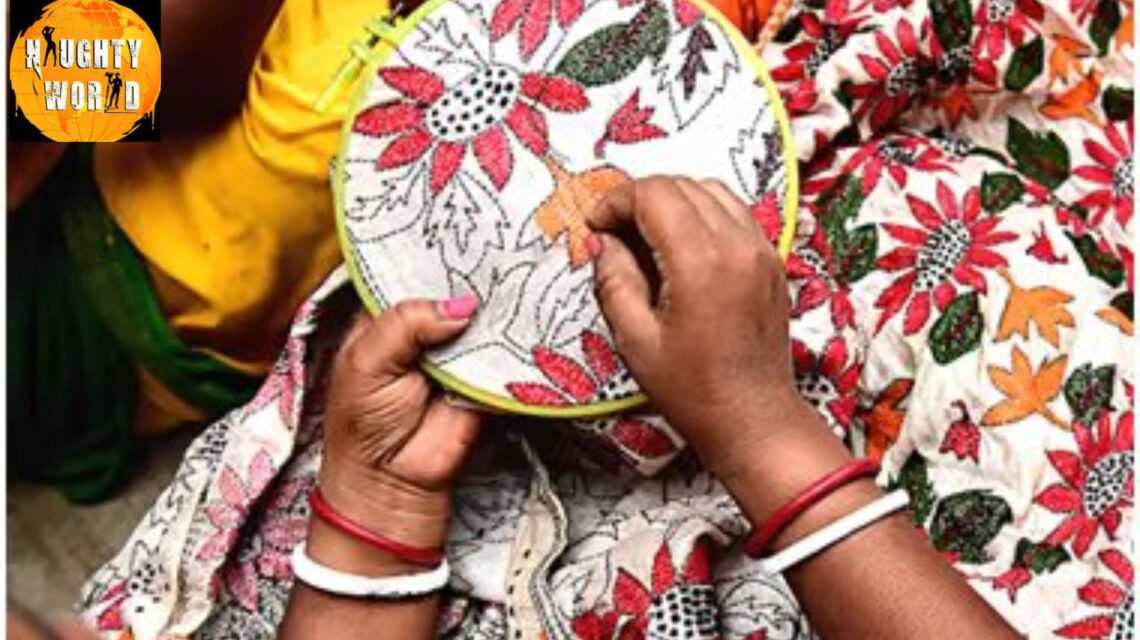
Hand embroidery work, from LucknowiChikankari and Kashmiri handiwork to Zardozi and Aari, is recognized for its rich detailing, fine craftsmanship, and beautiful textures. All such handiwork truly reflects India’s extensive artistic history. Each piece has a story of how the artisan brought it to life with incredible patience and enthusiasm.
But over time, as machine-made clothes have become easier to produce and reproduce in larger quantities, it has become harder to distinguish hand embroidery from machine-made work.
As a buyer, you may find it puzzling, as the changes might not be apparent right away. To recognize what sets real hand embroidery apart, Kailash Poojary, founder and CEO of V V. Exports Universal Pvt. Ltd., shared with HT Lifestyle a few practical ways to identify genuine craftsmanship, such as stitch variation and the texture on the reverse side of the fabric. He believed that the essence of genuine hand embroidery could never be fully replicated by machine work. To truly wear an embroidered garment, it is best to look for genuine, hand-embroidered pieces made by skilled artisans.
No two stitches look the same; there are always minor differences in each craft. Whenever you buy an embroidered garment, make sure you look closely at the stitchwork. Check whether it appears too clean, too neat, or too uniform, as it may then signal that it is machine-made.
The opposite side of the fabric can tell you a lot and help you categorize the embroidery process. Maximum buyers emphasize how the garment looks from the front, but the opposite side reveals how the work was actually done. Handiwork may create small irregularities that make it more beautiful.

 Learn a quick, beautiful makeup method from Janhvi Kapoor.
  Restaurant-style bharwaan tamatar.
  From Finland’s silence to Mumbai’s symphony.
  Mastering Tandoori: The science of smoke and spice.
  Balancing Protein and Fibre for lasting health.
  A woman is seen making a reel as her baby crawls towards the bridge edge behind her.