
 Kritika Gaur
 Smoking still dominates, but dirty air is emerging as a silent killer.
For decades, lung cancer was largely associated with smoking. Physicians would instinctively ask about tobacco use, since cigarettes were considered the primary culprit. While smoking remains the most significant risk factor, a troubling shift is unfolding in India: more people who have never smoked are being diagnosed with lung cancer.
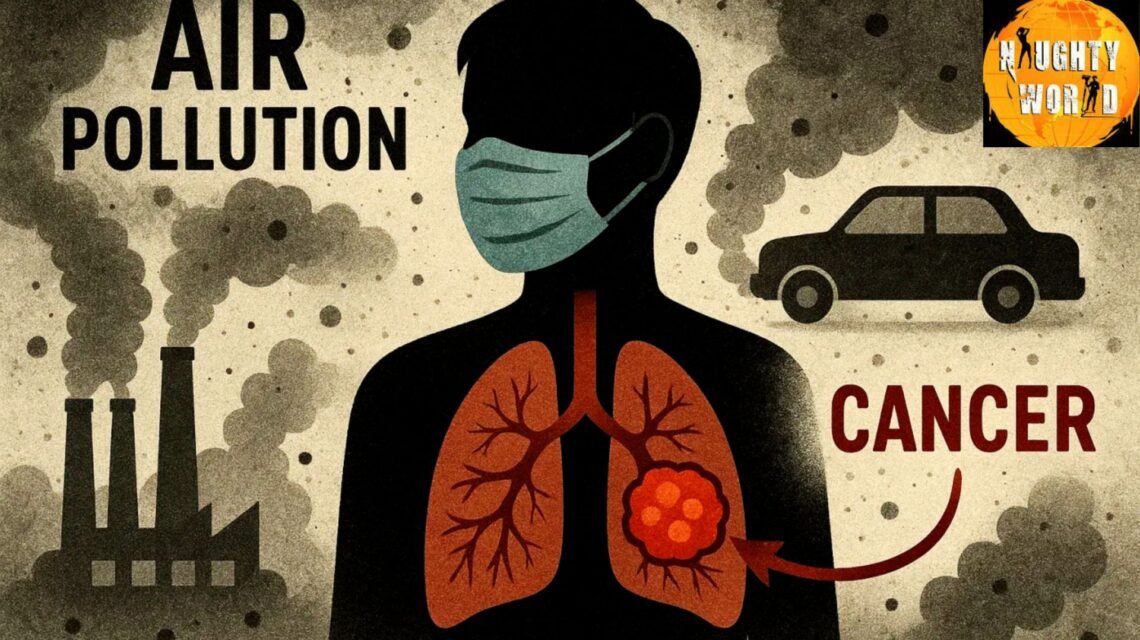
This change has pushed researchers to investigate other causes, with air pollution now under the spotlight. India’s expanding cities, relentless traffic, crop residue burning, industrial emissions, and construction dust expose millions to toxic air daily. Indoors, many households still rely on biomass fuels like wood and cow dung, compounding the risk.
Smoking vs. Pollution: Unequal but Alarming
Experts emphasize that smoking is still far more dangerous for an individual. Tobacco smoke contains thousands of carcinogens that directly damage lung tissue, making quitting the most effective way to reduce risk. Yet, polluted air poses a different kind of threat. Fine particles such as PM2.5 and harmful gases penetrate deep into the lungs, causing chronic inflammation and cellular damage over time. Unlike smoking, which affects only smokers, air pollution impacts entire communities, magnifying its public health burden.
Why Non-Smokers Are Falling Ill
Doctors are increasingly treating lung cancer in women and younger adults who have never smoked. The reasons are multifaceted: prolonged exposure to outdoor pollution, indoor smoke from cooking fuels, passive smoking, and occupational hazards. This trend underscores that lung cancer is no longer confined to smokers, it is becoming a disease shaped by environmental realities.
Not “The New Tobacco,” But A Growing Threat
While pollution cannot be equated with tobacco in terms of individual risk, its widespread reach makes it a serious concern. Since nearly everyone breathes polluted air, even modest risks translate into large numbers of cases. Improving air quality could prevent countless future diagnoses, particularly among non-smokers.
Protecting Yourself
Individuals can lower their risk by:
- Avoiding tobacco and second-hand smoke
- Switching to cleaner cooking fuels
- Wearing masks during severe pollution episodes
- Enhancing indoor ventilation
- Monitoring air quality and limiting outdoor activity when levels are hazardous
Early Detection Saves Lives
Persistent cough, unexplained weight loss, chest pain, or repeated infections should never be ignored. Early medical evaluation can dramatically improve outcomes.
India’s lung cancer landscape is evolving. Smoking remains the leading cause, but polluted air is emerging as a silent, population-wide threat. Tackling this challenge will require both personal vigilance and stronger environmental policies to secure cleaner air for the future.

 To improve your gut health, doctors suggest having chia seeds.
  IIT Madras and CMC Vellore pioneer AI tools for kidney disease detection
  Hidden calories in “Healthy” foods.
  Apple Cider Vinegar: Risks you shouldn’t ignore.
  India’s battle against Malaria: A decade of progress.
  Foods that sharpen the mind.