
 Kritika Gaur
 How a youth-led protest shook the establishment and inspired South Asia
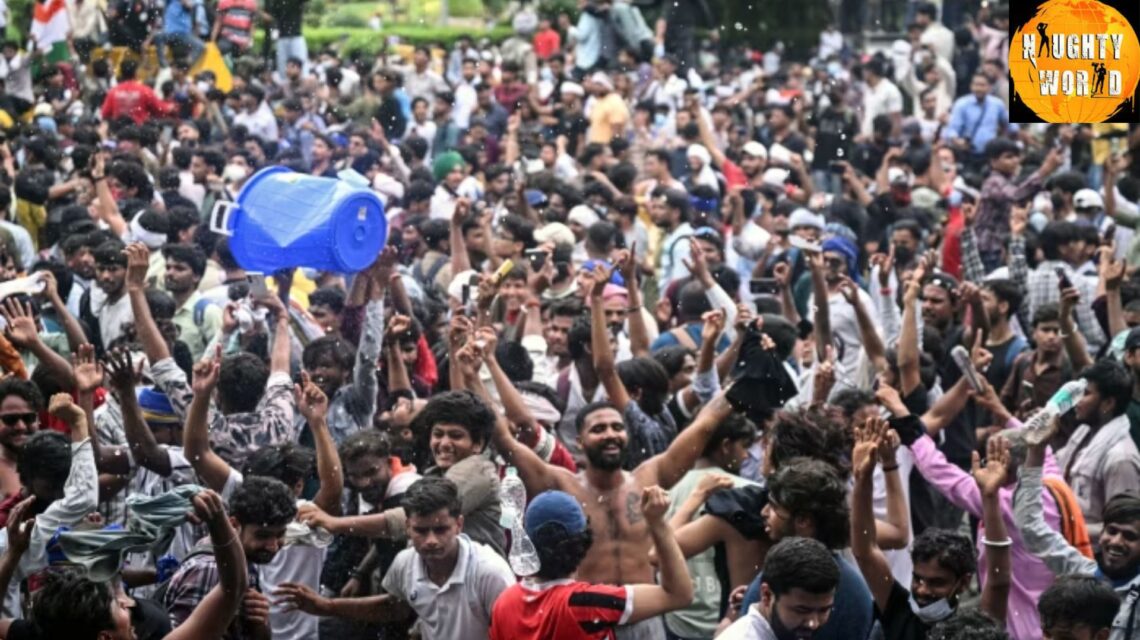
India’s Gen Z, often dismissed as distracted and glued to their screens, has turned those very traits into tools of resistance. Over the past month, their digital-first protests forced Education Minister Dharmendra Pradhan to resign after repeated exam paper leaks, marking a rare political retreat by a senior government figure. What began as frustration over systemic failures evolved into a nationwide youth uprising, with memes replacing manifestos and reels serving as rallying cries.
The protests, spearheaded by the Cockroach Janta Party (CJP), captured global attention. A defining image of the movement was Rhiya Ahir, a young Mumbai protester pressing her hand against a police van, evoking comparisons to the iconic “Tank Man” of Tiananmen Square. Such moments highlighted the courage and defiance of India’s youth, who refused to be silenced despite police crackdowns.
Beyond India’s borders, the movement resonated deeply. In Sri Lanka, where students led the 2022 uprising against the Rajapaksa regime, activists and artists expressed solidarity. Cartoons and social media posts celebrated India’s Gen Z, with Sri Lankan law students calling the protests “vibing at another level.” Veteran activists noted that India, once seen as immune to youth revolts, had finally joined the regional wave of student-led resistance.
In Nepal, memories of the 2025 Gen Z protests that toppled KP Oli’s government resurfaced. Content creators urged Indian students to stay focused, reminding them that anger and grief are valid but must remain tied to clear goals. Their messages underscored the shared struggles of South Asian youth confronting political stagnation.
Perhaps most striking was the admiration from Pakistan, where dissent is often stifled. Young voices praised India’s students for their unity across caste and religion, contrasting it with Pakistan’s fragmented social fabric. While some joked about “selling out for a plate of biryani,” others admitted they would have joined the protests if given the chance. Even Pakistani newspapers questioned why their own youth had not produced a similar movement, pointing to the suppression of student unions since the 1980s.
The CJP protests have become more than a domestic upheaval; they are a symbol of generational defiance across South Asia. India’s Gen Z, once mocked for their short attention spans and obsession with memes, have shown that digital humor and solidarity can be powerful political weapons. For the first time, the world isn’t laughing at their slogans, it’s learning from them.

 Azerbaijan’s strategic pivot.
  NIA drops terror charges against US mercenary.
  The illusion of wealth in dual-income homes
  Khushi Kapoor Acquisitions a new house valued at Rs 63 Lakh in Mumbai
  Living in a high-rise society has become a trend, but humanity seems to be lacking.
  Breaking free at 30: Teja’s bold exit from Big Tech.