
 Ankur Raghav
 MEA reiterates travel document role, expands services.
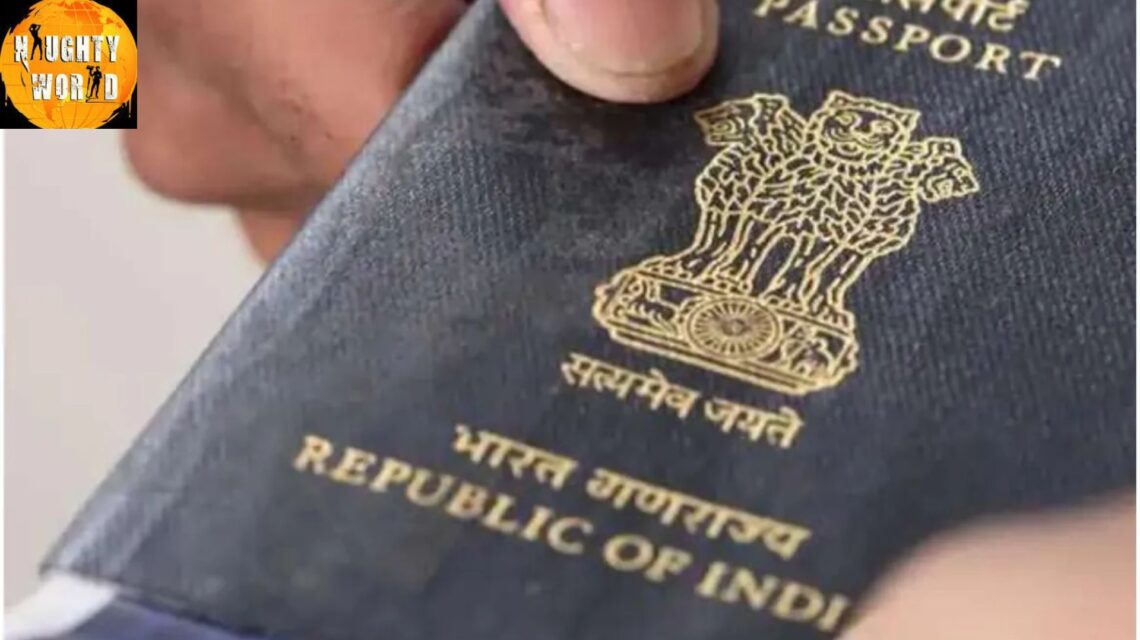
The Ministry of External Affairs (MEA) has clarified that while passports are issued exclusively to Indian citizens, they do not serve as definitive proof of citizenship. This statement, made on the occasion of the 14th Passport Seva Divas, has reignited discussions about what truly establishes citizenship in India.
According to the MEA, passports are primarily designed as travel documents to facilitate international movement. They remain the property of the Government of India and can be recalled at any time. This distinction highlights a paradox: although only citizens are eligible to receive passports, possession of one does not conclusively establish citizenship.
The debate is not new. Earlier this year, the Supreme Court ruled that Aadhaar cards cannot be considered proof of citizenship, describing them instead as identity documents. Similarly, voter ID cards are recognized as instruments of identity and residence, enabling citizens to vote but not serving as citizenship certificates.
Indian citizenship laws provide clearer criteria. Individuals born in India between January 26, 1950, and June 30, 1987, are citizens by birth. For those born after July 1987, at least one parent must be a citizen. The rules became stricter after December 3, 2004: citizenship by birth requires both parents to be Indian citizens, or one parent to be a citizen while the other is not an illegal immigrant. These legal provisions underscore that citizenship is determined by statutory law, not by possession of documents such as passports, Aadhaar, or voter IDs.
Beyond the clarification, the MEA showcased significant progress in passport services. In 2025 alone, 1.5 crore passport-related services were delivered, including 1.39 crore passports. The ministry also introduced chip-enabled e-passports, marking a technological upgrade.
Efficiency has improved dramatically. The average processing time has been reduced to six working days, excluding police verification. Citizens now spend less than 45 minutes at Passport Seva Kendras, reflecting streamlined procedures. This improvement is largely due to the expansion of service centres: India now has 545 passport kendras, compared to just 77 a decade ago.
The announcement underscores two realities. First, passports remain essential for international travel, but cannot be relied upon as proof of citizenship. Second, India’s passport infrastructure has expanded rapidly, offering faster, more accessible services to millions. Together, these developments highlight both the complexities of defining citizenship and the government’s efforts to modernize travel documentation.

 Mortgage rates are rising each day; recently, they are nearly 6.91%
  Xi Jinping’s India visit signals diplomatic reset.
  Iranian strike damages US warplanes in Jordan.
  US strikes Iranian tankers after warship attacks.
  UAE’s warning ignored: Netanyahu under fire over Hamas attack.
  Singapore confronts online racism amid rising Xenophobia.