
 Ankur Raghav
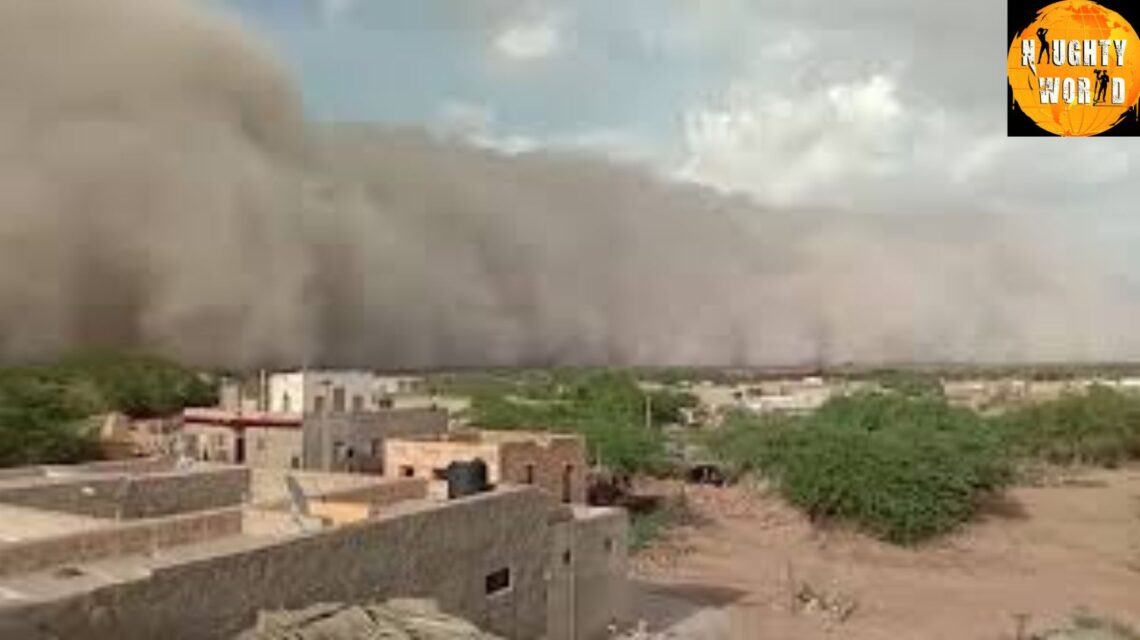
 Jaisalmer and much of western Rajasthan witnessed a massive dust storm on Sunday, May 31. This has happened two days in a row. The phenomenon, locally known as a kali-peeliandhi, transformed the desert skies into a surreal red haze, disrupting daily life but offering some respite from the punishing heatwave. The locals addressed it as a rare catastrophic like event which has not been witnessed in some years now.
The recurrence was fuelled by lingering atmospheric instability. Days of scorching heat had superheated the desert surface, causing the air above it to expand and rise quickly. This created unstable low-pressure zones that acted like vacuums. Strong winds rushed in to fill these gaps, sweeping up vast amounts of loose sand from the Thar Desert and hurling it skyward. The result was towering walls of dust that stretched for kilometres, reducing visibility to nearly zero and making travel hazardous. For many minutes, the day was converted into a night and everything came to s standstill.
Adding to the chaos was a Western Disturbance: A weather system originating from the Mediterranean. As its moisture-laden winds collided with the hot desert air, violent convective activity was triggered. Warm air surged upward while cooler currents plunged downward, intensifying the storm’s ferocity.
Impacted Areas
Dust clouds rolled across canal-irrigated zones and semi-arid towns such as Mohangarh and Sultana. The storm knocked out power in some places and disrupted transport, but it also broke the grip of the relentless heatwave, bringing a welcome drop in daytime temperatures across Rajasthan.

 Mortgage rates are rising each day; recently, they are nearly 6.91%
  Xi Jinping’s India visit signals diplomatic reset.
  Iranian strike damages US warplanes in Jordan.
  US strikes Iranian tankers after warship attacks.
  UAE’s warning ignored: Netanyahu under fire over Hamas attack.
  Singapore confronts online racism amid rising Xenophobia.