
 Kritika Gaur
 SIPRI report marks a strategic shift in 2025
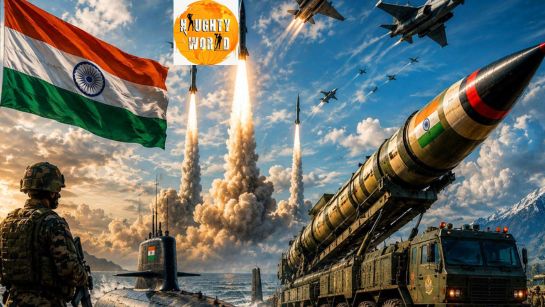
India has moved a portion of its nuclear arsenal into active deployment for the first time, according to the Stockholm International Peace Research Institute’s (SIPRI) Yearbook 2026. The think tank notes that in 2025, 12 warheads were mounted on delivery systems, signalling a new phase in India’s deterrence posture.
On the other hand, India’s neighbour, China, increased its deployed warheads from 24 to 34. SIPRI estimates that of the 12,187 warheads held worldwide at the start of 2026, roughly 4,012 were operationally deployed, with the United States and Russia accounting for the bulk.
India’s decision reflects a gradual evolution of its nuclear triad. The country can now deliver warheads through Arihant-class submarines, fighter aircraft such as Mirage 2000, Jaguar, Rafale, and Su-30MKI, as well as land-based missiles including Agni, Prithvi, Nirbhay, and BrahMos. Though the BrahMos is primarily a conventional strike weapon, its design allows for nuclear adaptation if required.
One notable point around this is the timing. In May 2025, India and Pakistan locked horns and were fighting at the LOC. India struck Pakistani air and missile bases believed to have nuclear roles, while both sides avoided escalation. SIPRI suggests this confrontation may have influenced India’s decision to shift part of its arsenal into deployed status.
India has been investing in longer-range systems capable of reaching targets deep inside China, reflecting its dual strategic concerns.
SIPRI warns that nuclear weapons are increasingly being treated as instruments of national power rather than last-resort deterrents. While most high-alert warheads belong to the US and Russia, the report notes that China and India may now occasionally keep a small number mounted even during peacetime.
This development marks a turning point for India’s nuclear policy—one that projects readiness but also raises fresh questions about stability in South Asia’s volatile security environment.

 Mortgage rates are rising each day; recently, they are nearly 6.91%
  Xi Jinping’s India visit signals diplomatic reset.
  Iranian strike damages US warplanes in Jordan.
  US strikes Iranian tankers after warship attacks.
  UAE’s warning ignored: Netanyahu under fire over Hamas attack.
  Singapore confronts online racism amid rising Xenophobia.